Showing posts with label taxes. Show all posts

Tuesday, February 20, 2018

ID Fraud and Your Taxes - Take Action!

   It's that time of year again.  Brian Krebs just put out two articles on the ongoing issue of tax fraud.  As is so often the case, the advice to protect yourself hasn't changed - and be assured, you must protect yourself because no one else will, certainly not the IRS!

   As noted below and in the Krebs' article, what you need to do now and always is:
  1. file your taxes early
  2. monitor your credit (I covered that topic here... in 2013!)
  3. freeze your credit (two articles from Krebs, also from 2015)
  4. become you before someone else becomes you (I wrote about that subject here and here)
   Here's a re-run of my article on this subject from three years ago.  It's all still true!  As I wrote nearly 5 years ago, the more things change the more they stay the same.

   I did a series of posts last year (2014) on the problem of ID Fraud.  This is an ongoing issue, certainly because organizations struggle to protect information, there are cyber attackers out there, and also individuals don't often take steps to protect their own information.

   The bottom line is that your personal information, primarily your financial information, has tangible dollar value to a cyber attacker.

   We usually think about credit card fraud or maybe bank account fraud as the results of these kinds of data breaches.  But in this post and the next I'd like to talk about two other scenarios that have happened, are happening... and you need to be aware.

   It's that wonderful time of year again in the US.  Crisp weather, snow (most places), the days are starting to get a bit longer... and it's the beginning of tax filing season.

   Imagine you are doing your civic duty, filling out and filing your tax return.  You send it in to the IRS, only to find out that "you" already filed your return and "you' have already received your rather sizable refund - surprise!

   Unfortunately, this has happened.  And, as we've discussed in the past, these attackers are smart.  This is a business.  They need to be able to maximize profits because there is a limited timeframe in which to commit the crime.  So they need to attack a sub-population who:
  1. makes good money;
  2. might have many deductions;
  3. might have complex returns, and;
  4. for whom a large refund might not raise red flags.
   How about... Doctors!

   And, just as I finishing writing this article, we have new news out about tax fraud this year!  Reports say this is connected with Turbo Tax software, but it is more likely that scammers got people's info through other means and filed the fraudulent returns.  Maybe Turbo Tax is just the scammers software of choice! :-)

   As always, we want to talk about what you can do.

   In addition to the steps outlined in these previous blog posts, here is the IRS Guide on Identity Theft.  The IRS guide and my previous tips talk about not only what you should do if you are a victim, but tips to avoid the problem in the first place including:
  • protecting your personal information, primarily your social security number
  • don't click on links sent to you via email or in social media - type the link in yourself or do a search
  • use link rating applications like Web Of Trust (WOT)
  • don't give our your personal information via web, email, phone unless you can positively identify the person on the other end
  • review your bills, credit record and other information that might provide early warning of a problem.
   Have you been the victim of tax-related ID Fraud?  Do you have any additional tips to share?

   Of course, this issue is not just about doctors!  Next time we'll talk about something perhaps even closer to your wallet... payroll fraud and misuse.

Tuesday, August 22, 2017

Don't Blame The IRS

  In a post last month, I include a recording of an obviously fake voice message warning about payment and fines due to the IRS.  If you've read my blog in the past, I talk a lot about scams and give tips to avoid them.  We've often discussed that legitimate organizations should not just contact you and ask for personal information.

   That just makes sense.

   But telling the difference between a legitimate call and a scam call has gotten harder.

   A reader let me know that the IRS is now using collection agencies to collect back taxes!  That just makes it even tougher to tell the difference between a legit collection call and a scam!

Tuesday, July 25, 2017

The Matter at the Hand

   Check this out!...


   Here's a transcript:

   Calling from Criminal Investigation Division of I-R-S.  The matter at the hand is extremely time sensitive and urgent, as after all that, we found that, there was a fraud and misconduct on your tax which you are hiding from the federal government. This need to be rectified immediately so do return the call as soon as you receive the message. The toll free number is 1-8-6-6-9-7-8-6-6-1-8. I repeat again, 1-8-6-6-9-7-8-6-6-1-8. Thank you.

   Needless to say, this is a scam.  You can look at all of these reports on phone number lookup sites.

   Now, you may think that this obviously sounds like a scam.  However, it unfortunately works.

   So what should you do if you or someone you know receives one of these calls?

  1. Don't respond.  Just leave that alone.
  2. Report it.  Here is the FTC info page on reporting scams, spams, do not call or telemarketing violations and other issues.  Here is the complaint reporting page.
   I did file a report with the FTC.  It doesn't take long and it's the right thing to do.

   While these calls can be either annoying or entertaining, the bottom line is that they work and some people do fall for these scams.  So educate yourself and others.

   Do you have any interesting robo-call or scam stories to share?

Tuesday, February 14, 2017

ID Fraud, Taxes and Doctors Again (Still?)

   It's that time of year again.  Brian Krebs just put out an article on "darkweb" sales of W-2 information.  You can read that article here.  As is so often the case, the advice to protect yourself hasn't changed - and be assured, you must protect yourself because no one else will, certainly not the IRS!

   As noted below and in the Krebs' article, what you need to do now and always is:

  1. file your taxes early
  2. monitor your credit (I covered that topic here... in 2013!)
  3. freeze your credit (two articles from Krebs, also from 2015)
  4. become you before someone else becomes you (I wrote about that subject here)

   Here's a re-run of my article on this subject from two years ago.  It's all still true...

   I did a series of posts last year (2014) on the problem of ID Fraud.  This is an ongoing issue, certainly because organizations struggle to protect information, there are cyber attackers out there, and also individuals don't often take steps to protect their own information.

   The bottom line is that your personal information, primarily your financial information, has tangible dollar value to a cyber attacker.

   We usually think about credit card fraud or maybe bank account fraud as the results of these kinds of data breaches.  But in this post and the next I'd like to talk about two other scenarios that have happened, are happening... and you need to be aware.

   It's that wonderful time of year again in the US.  Crisp weather, snow (most places), the days are starting to get a bit longer... and it's the beginning of tax filing season.

   Imagine you are doing your civic duty, filling out and filing your tax return.  You send it in to the IRS, only to find out that "you" already filed your return and "you' have already received your rather sizable refund - surprise!

   Unfortunately, this has happened.  And, as we've discussed in the past, these attackers are smart.  This is a business.  They need to be able to maximize profits because there is a limited timeframe in which to commit the crime.  So they need to attack a sub-population who:
  1. makes good money;
  2. might have many deductions;
  3. might have complex returns, and;
  4. for whom a large refund might not raise red flags.
   How about... Doctors!

   And, just as I finishing writing this article, we have new news out about tax fraud this year!  Reports say this is connected with Turbo Tax software, but it is more likely that scammers got people's info through other means and filed the fraudulent returns.  Maybe Turbo Tax is just the scammers software of choice! :-)

   As always, we want to talk about what you can do.

   In addition to the steps outlined in these previous blog posts, here is the IRS Guide on Identity Theft.  The IRS guide and my previous tips talk about not only what you should do if you are a victim, but tips to avoid the problem in the first place including:
  • protecting your personal information, primarily your social security number
  • don't click on links sent to you via email or in social media - type the link in yourself or do a search
  • use link rating applications like Web Of Trust (WOT)
  • don't give our your personal information via web, email, phone unless you can positively identify the person on the other end
  • review your bills, credit record and other information that might provide early warning of a problem.
   Have you been the victim of tax-related ID Fraud?  Do you have any additional tips to share?

   Of course, this issue is not just about doctors!  Next time we'll talk about something perhaps even closer to your wallet... payroll fraud and misuse.
Tuesday, March 31, 2015

Sign Up Now at IRS.gov!

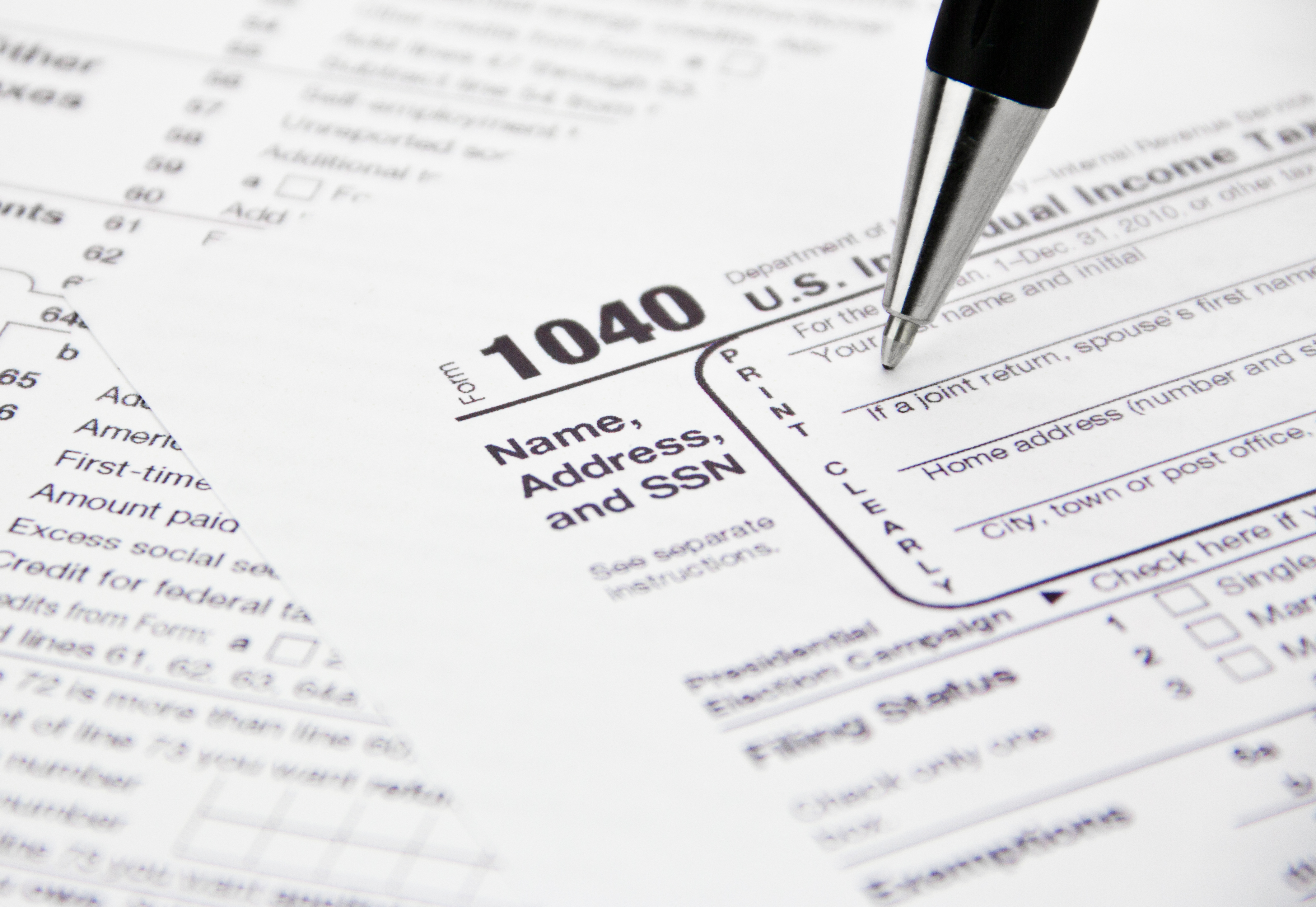
   ID Fraud has been a popular topic lately.  This is especially timely with it being tax season in the US and the filing deadline around the corner.  I wrote about ID Fraud and taxes a few posts ago.

   I'm a big fan of Brian Krebs' work.  Whether you're a security professional or a consumer interested in the security and privacy of your information (or both!), his blog posts and articles are usually great reads.  He recently put up a post entitled "Sign up at IRS.gov, before the crooks do it for you".  Read it here.

   It turns out that the IRS has a function on its website that allows you to get information about your past and current returns.  You need to create an account to do so.  The site does use a form of "identity proofing".  This means that the site asks you to provide personal data that it matches to information it already has.

   Identity Proofing is a great idea, in theory.  It's designed to bypass the "Facebook attack" that is effective on so many other websites, particularly those that ask for answers to "secret questions".  The so-called Facebook attack is when the answers to the secret questions or other identity information can easily be found on someone's Facebook page, or other social media (since Facebook is the "Kleenex" of social media! :-).

   Side note... as I've discussed in the past, the "correct" way to answer secret questions is to not answer them truthfully.  Then save your answers in your password vault.  You do have a password vault, right?

   The issue is that an ID thief can get to the site and set up an account in your name before you do!  They can then use that to get more identity and tax information about you.  Of course, the potential thief must know or guess a certain amount of information first.

   From the Krebs' article:
If you’re an American and haven’t yet created an account at irs.gov, you may want to take care of that before tax fraudsters create an account in your name and steal your personal and tax data in the process.
   From the IRS.gov website, here is what you need to sign up:
"The personal information you enter must match the information you provided us on your most recent tax return. We use the following information to verify your identity:
  • Name
  • Social Security Number or Individual Tax ID Number (ITIN)
  • Date of Birth
  • Filing Status
  • Mailing Address
  • Third Party Verification Questions - you must provide answers to questions about personal information such as prior address, mortgage information, etc., that only you should know.
You must also provide us with a valid email address, which we will confirm and use to notify you if your registration information changes. Your confirmation email should arrive quickly so check your junk folder if you don't see it."
   Note that you might need your tax return handy when you sign up.  You need to enter your info exactly as it appears in your tax records.  For example, did you use "road" or "rd" or "rd." in your address?

   Whether or not you plan to use the IRS online transcript services, you should still get in there and create your account... before someone does it for you!

Tuesday, February 10, 2015

ID Fraud, Taxes and Doctors, Oh My!

   I did a series of posts last year on the problem of ID Fraud.  This is an ongoing issue, certainly because organizations struggle to protect information, there are cyber attackers out there, and also individuals don't often take steps to protect their own information.

   The bottom line is that your personal information, primarily your financial information, has tangible dollar value to a cyber attacker.

   We usually think about credit card fraud or maybe bank account fraud as the results of these kinds of data breaches.  But in this post and the next I'd like to talk about two other scenarios that have happened, are happening... and you need to be aware.

   It's that wonderful time of year again in the US.  Crisp weather, snow (most places), the days are starting to get a bit longer... and it's the beginning of tax filing season.

   Imagine you are doing your civic duty, filling out and filing your tax return.  You send it in to the IRS, only to find out that "you" already filed your return and "you' have already received your rather sizable refund - surprise!

   Unfortunately, this has happened.  And, as we've discussed in the past, these attackers are smart.  This is a business.  They need to be able to maximize profits because there is a limited timeframe in which to commit the crime.  So they need to attack a sub-population who:
  1. makes good money;
  2. might have many deductions;
  3. might have complex returns, and;
  4. for whom a large refund might not raise red flags.
   How about... Doctors!


   And, just as I finishing writing this article, we have new news out about tax fraud this year!  Reports say this is connected with Turbo Tax software, but it is more likely that scammers got people's info through other means and filed the fraudulent returns.  Maybe Turbo Tax is just the scammers software of choice! :-)

   As always, we want to talk about what you can do.

   In addition to the steps outlined in these previous blog posts, here is the IRS Guide on Identity Theft.  The IRS guide and my previous tips talk about not only what you should do if you are a victim, but tips to avoid the problem in the first place including:
  • protecting your personal information, primarily your social security number
  • don't click on links sent to you via email or in social media - type the link in yourself or do a search
  • use link rating applications like Web Of Trust (WOT)
  • don't give our your personal information via web, email, phone unless you can positively identify the person on the other end
  • review your bills, credit record and other information that might provide early warning of a problem.
   Have you been the victim of tax-related ID Fraud?  Do you have any additional tips to share?

   Of course, this issue is not just about doctors!  Next time we'll talk about something perhaps even closer to your wallet... payroll fraud and misuse.