Showing posts with label cyber. Show all posts

Tuesday, February 20, 2018

ID Fraud and Your Taxes - Take Action!

   It's that time of year again.  Brian Krebs just put out two articles on the ongoing issue of tax fraud.  As is so often the case, the advice to protect yourself hasn't changed - and be assured, you must protect yourself because no one else will, certainly not the IRS!

   As noted below and in the Krebs' article, what you need to do now and always is:
  1. file your taxes early
  2. monitor your credit (I covered that topic here... in 2013!)
  3. freeze your credit (two articles from Krebs, also from 2015)
  4. become you before someone else becomes you (I wrote about that subject here and here)
   Here's a re-run of my article on this subject from three years ago.  It's all still true!  As I wrote nearly 5 years ago, the more things change the more they stay the same.

   I did a series of posts last year (2014) on the problem of ID Fraud.  This is an ongoing issue, certainly because organizations struggle to protect information, there are cyber attackers out there, and also individuals don't often take steps to protect their own information.

   The bottom line is that your personal information, primarily your financial information, has tangible dollar value to a cyber attacker.

   We usually think about credit card fraud or maybe bank account fraud as the results of these kinds of data breaches.  But in this post and the next I'd like to talk about two other scenarios that have happened, are happening... and you need to be aware.

   It's that wonderful time of year again in the US.  Crisp weather, snow (most places), the days are starting to get a bit longer... and it's the beginning of tax filing season.

   Imagine you are doing your civic duty, filling out and filing your tax return.  You send it in to the IRS, only to find out that "you" already filed your return and "you' have already received your rather sizable refund - surprise!

   Unfortunately, this has happened.  And, as we've discussed in the past, these attackers are smart.  This is a business.  They need to be able to maximize profits because there is a limited timeframe in which to commit the crime.  So they need to attack a sub-population who:
  1. makes good money;
  2. might have many deductions;
  3. might have complex returns, and;
  4. for whom a large refund might not raise red flags.
   How about... Doctors!

   And, just as I finishing writing this article, we have new news out about tax fraud this year!  Reports say this is connected with Turbo Tax software, but it is more likely that scammers got people's info through other means and filed the fraudulent returns.  Maybe Turbo Tax is just the scammers software of choice! :-)

   As always, we want to talk about what you can do.

   In addition to the steps outlined in these previous blog posts, here is the IRS Guide on Identity Theft.  The IRS guide and my previous tips talk about not only what you should do if you are a victim, but tips to avoid the problem in the first place including:
  • protecting your personal information, primarily your social security number
  • don't click on links sent to you via email or in social media - type the link in yourself or do a search
  • use link rating applications like Web Of Trust (WOT)
  • don't give our your personal information via web, email, phone unless you can positively identify the person on the other end
  • review your bills, credit record and other information that might provide early warning of a problem.
   Have you been the victim of tax-related ID Fraud?  Do you have any additional tips to share?

   Of course, this issue is not just about doctors!  Next time we'll talk about something perhaps even closer to your wallet... payroll fraud and misuse.

Tuesday, January 9, 2018

Meta-Predictions

   Well, it's a new year and we all know what that means... every security publication, and plenty of non-security publications, come out with their annual security predictions.

   I predict that this year's predictions will be as boring and vanilla as last year's.  And we don't even have to wait until the end of the year to see if I'm right!

   So, rather than adding to the noise, I'll save you some clicks.  Everybody's saying the same things... cybercrime, blockchain, cryptocurrency, breaches, yada yada.

   But some people went above and beyond to make the prediction reading experience special!  Here are my favorites:

   Best presentation.  Kudos on the production value of this prediction post by Watchguard.  Between the nice graphics and videos, I was engaged.  They didn't say anything new... but the way they said it makes it worth a look.
https://www.watchguard.com/wgrd-resource-center/2018-security-predictions

   Best use of AI.  This is a great idea... how about machine-generated predictions!  Great fun.  And I, for one, welcome our AI overlords.  Even the text that doesn't make sense makes more sense than some other predictions!  Well done Kelly and Medium.
https://medium.com/@kshortridge/2018-cyber-security-predictions-d493e25162e7

   Best prediction of the death of passwords.  Well, really they said that password-only authentication will decrease faster.  OK, either way, we've been down this road many times before and, unfortunately, passwords ain't goin' nowhere.  We're stuck with them.
https://www.csoonline.com/article/3242866/security/our-top-7-cyber-security-predictions-for-2018.html

   Remembering what we said in 2017 award.  This post doesn't say anything particularly interesting, but I like that they go back and grade their 2017 predictions.  Of course, those predictions were pretty bland but they only gave themselves a generous 9.5 out of 10.  http://resources.infosecinstitute.com/2018-cyber-security-predictions/

   tl;dr award.  I seriously did not even read this one.  Really Forbes?  60 predictions?  I guess all the ad networks you hit us with aren't enough?  I guess quantity wins.
https://www.forbes.com/sites/gilpress/2017/11/26/60-cybersecurity-predictions-for-2018/

   What are your favorite predictions?

   Here's to a great 2018!

Tuesday, October 17, 2017

Still Can't Live With 'Em


   It's US Cyber Security Month and, like clockwork, we have Yahoo! in the news again telling us that the worst case from the past just keeps getting worster (I can make up words, can't I??? :-).  They are now counting their breached accounts at over 3 billion!  How many people are there in the world these days?...  Last year at this time, they announced the breach of 500 million Yahoo! account passwords and other info (while announced in 2016, the breach actually took place in 2014, and is not the same as the password breach they had in 2012! - yes, I know... it's hard to keep up!).  In honor of both Cyber Security Month and Yahoo!, I'm re-running a post I wrote in... wait for it... 2012!  Not only is everything I wrote in that post 100% relevant today, but I even commented on that 2012 Yahoo! breach.  The more things change, the more they stay the same.  Happy Cyber Security Month!


   They're dead.  They're here to stay.

   They're safe.  They're breached.

   They're encrypted.  They're visible.

   They're complex.  They're too simple.

   Once again, the topic we love to hate... Passwords!  And, you know what else???  It's also that greatest of holiday celebrations... US Cyber Security Month!

   Passwords are a mess!  A "good" password has these features:
  • hard to create
  • hard to remember
  • hard to enter
  • probably has to be changed as soon as you memorize it
  • plus other inconsistent, random rules depending upon the site

   Perfect!

Tuesday, February 14, 2017

ID Fraud, Taxes and Doctors Again (Still?)

   It's that time of year again.  Brian Krebs just put out an article on "darkweb" sales of W-2 information.  You can read that article here.  As is so often the case, the advice to protect yourself hasn't changed - and be assured, you must protect yourself because no one else will, certainly not the IRS!

   As noted below and in the Krebs' article, what you need to do now and always is:

  1. file your taxes early
  2. monitor your credit (I covered that topic here... in 2013!)
  3. freeze your credit (two articles from Krebs, also from 2015)
  4. become you before someone else becomes you (I wrote about that subject here)

   Here's a re-run of my article on this subject from two years ago.  It's all still true...

   I did a series of posts last year (2014) on the problem of ID Fraud.  This is an ongoing issue, certainly because organizations struggle to protect information, there are cyber attackers out there, and also individuals don't often take steps to protect their own information.

   The bottom line is that your personal information, primarily your financial information, has tangible dollar value to a cyber attacker.

   We usually think about credit card fraud or maybe bank account fraud as the results of these kinds of data breaches.  But in this post and the next I'd like to talk about two other scenarios that have happened, are happening... and you need to be aware.

   It's that wonderful time of year again in the US.  Crisp weather, snow (most places), the days are starting to get a bit longer... and it's the beginning of tax filing season.

   Imagine you are doing your civic duty, filling out and filing your tax return.  You send it in to the IRS, only to find out that "you" already filed your return and "you' have already received your rather sizable refund - surprise!

   Unfortunately, this has happened.  And, as we've discussed in the past, these attackers are smart.  This is a business.  They need to be able to maximize profits because there is a limited timeframe in which to commit the crime.  So they need to attack a sub-population who:
  1. makes good money;
  2. might have many deductions;
  3. might have complex returns, and;
  4. for whom a large refund might not raise red flags.
   How about... Doctors!

   And, just as I finishing writing this article, we have new news out about tax fraud this year!  Reports say this is connected with Turbo Tax software, but it is more likely that scammers got people's info through other means and filed the fraudulent returns.  Maybe Turbo Tax is just the scammers software of choice! :-)

   As always, we want to talk about what you can do.

   In addition to the steps outlined in these previous blog posts, here is the IRS Guide on Identity Theft.  The IRS guide and my previous tips talk about not only what you should do if you are a victim, but tips to avoid the problem in the first place including:
  • protecting your personal information, primarily your social security number
  • don't click on links sent to you via email or in social media - type the link in yourself or do a search
  • use link rating applications like Web Of Trust (WOT)
  • don't give our your personal information via web, email, phone unless you can positively identify the person on the other end
  • review your bills, credit record and other information that might provide early warning of a problem.
   Have you been the victim of tax-related ID Fraud?  Do you have any additional tips to share?

   Of course, this issue is not just about doctors!  Next time we'll talk about something perhaps even closer to your wallet... payroll fraud and misuse.

Tuesday, October 4, 2016

Can't Live with 'em, Can't Live without 'em

   They're dead.  They're here to stay.

   They're safe.  They're breached.

   They're encrypted.  They're visible.

   They're complex.  They're too simple.

   Once again, the topic we love to hate... Passwords!  And, you know what else???  It's also that greatest of holiday celebrations... US Cyber Security Month!

   In honor of US Cyber Security Month and the recently announced breach of 500 million Yahoo! account passwords and other info  (while announced in 2016, the breach actually took place in 2014, and is not the same as the password breach they had in 2012! - yes, I know... it's hard to keep up!), I'm re-running a post I wrote in... wait for it... 2012!  Not only is everything I wrote in that post 100% relevant today, but I even commented on that 2012 Yahoo! breach.  The more things change, the more they stay the same.  Happy Cyber Security Month!
-----------------
   Passwords are a mess!  A "good" password has these features:
  • hard to create
  • hard to remember
  • hard to enter
  • probably has to be changed as soon as you memorize it
  • plus other inconsistent, random rules depending upon the site
   Perfect!

Tuesday, November 10, 2015

Hospital Held Hostage

  A number of people alerted me that a recent episode of CSI:Cyber, which aired on 11/1/15, had as its theme a cyber attack on a hospital.  The episode was entitled "hack E.R." (see what they did there??? :-) )

   The episode begins with an ominous image showing up on computer screens and all systems in a fictional hospital being under the control of an online attacker.  They threaten to kill a victim every four hours if not paid a ransom.  They then kill a victim by causing an infusion pump to deliver a fatal dose of morphine while preventing the patient's heart monitor from alarming.

   We then follow the CSI:Cyber team and the hospital staff as they try to solve the mystery and track down and stop the attacker.  I won't give a full synopsis nor a review.  You can find some of that here and here (spoiler alert - these linked articles do give away the ending).

   Let's review what was potentially real and some of the deficiencies of the episode.  First the realistic.

Monday, October 12, 2015

Keep Celebrating! - Mobile and Social

   We continue our celebration of US Cyber Security Awareness month!  This partnership between Homeland Security, NCSA (National Cyber Security Alliance) and the MS-ISAC (Multi-State Information Sharing and Analysis Center) is an opportunity to recognize the importance of information security.  It started in 2003 as a way to build awareness for online security and privacy and to encourage individuals, business and government.

   This is another of my weekly posts connected with the weekly themes put together by DHS.  This week the theme is staying protected while always connected.  That rhymes!

   We are always connected!  According to the Pew Research Center, in 2015 90% of american adults own a cell phone, 64% own a smart phone.  And one of the major uses for smart phones is... not calls but social media!  How do we stay safe online and on the move?

Monday, October 5, 2015

Celebrate! - A Culture of Security

   It's time again to celebrate that wonderful US event... Happy Cyber Security Awareness month!  This partnership between Homeland Security, NCSA (National Cyber Security Alliance) and the MS-ISAC (Multi-State Information Sharing and Analysis Center) is an opportunity to recognize the importance of information security.  It started in 2003 as a way to build awareness for online security and privacy and to encourage individuals, business and government.

   This month I'll be putting out weekly posts connected with the weekly themes put together by DHS.  This week the theme is creating a culture of security.

   The message is simple... in the workplace security is a team sport.  All organizations have customers, patients, systems and data to protect.  To accomplish this, security must be part of everyone's job.

Tuesday, February 10, 2015

ID Fraud, Taxes and Doctors, Oh My!

   I did a series of posts last year on the problem of ID Fraud.  This is an ongoing issue, certainly because organizations struggle to protect information, there are cyber attackers out there, and also individuals don't often take steps to protect their own information.

   The bottom line is that your personal information, primarily your financial information, has tangible dollar value to a cyber attacker.

   We usually think about credit card fraud or maybe bank account fraud as the results of these kinds of data breaches.  But in this post and the next I'd like to talk about two other scenarios that have happened, are happening... and you need to be aware.

   It's that wonderful time of year again in the US.  Crisp weather, snow (most places), the days are starting to get a bit longer... and it's the beginning of tax filing season.

   Imagine you are doing your civic duty, filling out and filing your tax return.  You send it in to the IRS, only to find out that "you" already filed your return and "you' have already received your rather sizable refund - surprise!

   Unfortunately, this has happened.  And, as we've discussed in the past, these attackers are smart.  This is a business.  They need to be able to maximize profits because there is a limited timeframe in which to commit the crime.  So they need to attack a sub-population who:
  1. makes good money;
  2. might have many deductions;
  3. might have complex returns, and;
  4. for whom a large refund might not raise red flags.
   How about... Doctors!


   And, just as I finishing writing this article, we have new news out about tax fraud this year!  Reports say this is connected with Turbo Tax software, but it is more likely that scammers got people's info through other means and filed the fraudulent returns.  Maybe Turbo Tax is just the scammers software of choice! :-)

   As always, we want to talk about what you can do.

   In addition to the steps outlined in these previous blog posts, here is the IRS Guide on Identity Theft.  The IRS guide and my previous tips talk about not only what you should do if you are a victim, but tips to avoid the problem in the first place including:
  • protecting your personal information, primarily your social security number
  • don't click on links sent to you via email or in social media - type the link in yourself or do a search
  • use link rating applications like Web Of Trust (WOT)
  • don't give our your personal information via web, email, phone unless you can positively identify the person on the other end
  • review your bills, credit record and other information that might provide early warning of a problem.
   Have you been the victim of tax-related ID Fraud?  Do you have any additional tips to share?

   Of course, this issue is not just about doctors!  Next time we'll talk about something perhaps even closer to your wallet... payroll fraud and misuse.

Tuesday, October 7, 2014

Celebrate Cyber-Style!

   It's time again to celebrate that wonderful US event... Happy Cyber Security Awareness month!  This event started in 2003 as a way to build awareness for online security and privacy and to encourage individuals, business and government.

   Over the past couple of posts I've focused on Identity Fraud (here and here).  We'll pause on that topic until next time.

   Today I give you...  The Top 10 Ways to Celebrate Cyber Security Month 2014!
  1. Change your password
  2. Yes, I know... I said in the past that just changing your password is not the effective measure.  That's true but with the frequency with which online sites get compromised, it's not a bad idea.  Even better - use really long passwords.  Remember, when it comes to passwords... size matters!

  3. Use a password vault
  4. A password vault is a program that encrypts and holds all your passwords.  I explain these in detail, and list some good products, in this post.

  5. Look before you click
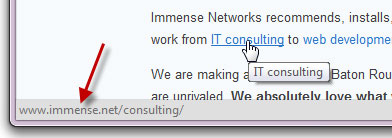
  6. With most links to can "mouse over" the link.  That means you just move your mouse so it's on the link, but don't click yet!  Your browser will display the address to which the link will lead.  This displays at the bottom of the browser.  The actual link in the display should make sense and be the location you're expecting.  If not then... don't click!

Tuesday, October 15, 2013

Online Self Defense - Passwords

   Next week I'll be presenting at the Cyber Security Summit in Minneapolis.  I hope to see you there!

   It's Cyber Security Month!  And the more things change, the more they stay the same.  The key advice for online self-defense I've given in the past is just as true now.  So to help us all celebrate, I'm "re-featuring" a few articles I've run in the past.


   Last week I started a series on themes I covered in a talk entitled "Online Self-Defense".  In part 1 of that series, posted here, I talked about protecting your computer. This week we'll look at passwords.

   Passwords are a mess!  A "good" password has these features:
  • hard to create
  • hard to remember
  • hard to enter
  • probably has to be changed as soon as you memorize it
  • plus other inconsistent, random rules depending upon the site
   Perfect!

Tuesday, October 8, 2013

Online Self Defense - Your Computer

   It's Cyber Security Month!  And the more things change, the more they stay the same.  The key advice for online self-defense I've given in the past is just as true now.  So to help us all celebrate, I'm "re-featuring" a few articles I've run in the past.


   Happy US Cyber Security Month!  This partnership between Homeland Security, NCSA and MS-ISAC is an opportunity to recognize the importance of information security.  How are you celebrating?

   Last week I ran a couple of sessions at work on awareness and security.  Over the next few posts I will be reviewing some of the 3 themes I covered in a talk entitled "Online Self-Defense". You can view the slides on my slideshare page. (actually, the talk focuses on just 2 of the themes but that's OK!). Since everything comes in threes (omne trium perfectum), I will give 3 easy tips for each theme (and some bonus tips as well).

   The first theme is protecting your computer or device.

Tuesday, October 16, 2012

Online Self Defense - Part 2 - Passwords

   Last week I started a series on themes I covered in a talk entitled "Online Self-Defense".  In part 1 of that series, posted here, I talked about protecting your computer. This week we'll look at passwords.

   Passwords are a mess!  A "good" password has these features:

  • hard to create
  • hard to remember
  • hard to enter
  • probably has to be changed as soon as you memorize it
  • plus other inconsistent, random rules depending upon the site
   Perfect!

Tuesday, October 9, 2012

Online Self Defense - Part 1 - Your Computer

   Happy US Cyber Security Month!  This partnership between Homeland Security, NCSA and MS-ISAC is an opportunity to recognize the importance of information security.  How are you celebrating?

   Last week I ran a couple of sessions at work on awareness and security.  Over the next few posts I will be reviewing some of the 3 themes I covered in a talk entitled "Online Self-Defense". You can view the slides on my slideshare page. (actually, the talk focuses on just 2 of the themes but that's OK!). Since everything comes in threes (omne trium perfectum), I will give 3 easy tips for each theme (and some bonus tips as well).

   The first theme is protecting your computer or device.