Showing posts with label security. Show all posts

Tuesday, April 24, 2018

Unprecedented Growth in the Fight to Eradicate Scam

   My first thought when I saw this email was that it's from someone with the same name as the guy
from Arrested Development.  Of course, that's Michael Cera!

   The only thing missing is a link or attachment.

   Of course, there are tons of emails like this around.  And people do respond.

   Would you respond?  How many people at your workplace would respond?  How would you help people recognize this kind of email and not respond?


International Debt Funds Recoup Unit of
United States Department of the Treasury Washington DC.
1500 Pennsylvania Avenue, NW;
Washington, DC 20220


Hello,


International Debt Funds Recoup Unit, incorporated November, 2016 as affiliate of United States Department of the Treasury Washington DC, established for the control of recouped international debt funds, within the short time of this establishment, we have experienced unprecedented growth in the fight to eradicate scam and terrorism.

With Our vast experience cutting across several facets of the world and affiliations with numbers of reputable foreign and local organizations, International Debt Funds Recoup Unit has brilliantly done very well in contributing to the effort of the American Government to curtail fictitious and nefarious activities of scam via the internet, which is perpetually taken out on citizens of United States and innocent citizens of other part of the world by impostors through our vast networking.

We implore your earnestly attention on our resent activities in affiliation with Federal Bureau of Investigation FBI. Your computer and telephone communication  were under surveillance device manipulation on discovery that you have been in communication with impostors, imposing as important dignitaries to the undisclosed organization.

The transaction database of Western Union and Wal-Mart Money Gram recently went through screening on evidence for transaction made on your name overseas and the statements of your bank account were properly studied on evidence for transaction made within the states and overseas. However, the collective findings urged the setup of multifaceted maximum security on your everyday activities most specially your email correspondence and telephone communications.

The state of affairs grows to be interesting that intelligent agent of International Debt Funds Recoup Unit and Federal Bureau of Investigation FBI,
where deployed to investigate on issues of debt funds as a result of Contract Payment Funds, Lottery Winning Funds and Inheritance Funds owe to you by the undisclosed conglomerate under impersonation of impostors imposing as important dignitaries to rip you off your hard earned money and to our dismay, it was discovered that your name appeared as owner of funds valued US$10.5Million United States Dollars.

Representatives of American Government bureaus sent on your behalf on this exploit confirmed that the blueprint of your funds recoup was plain and the outcome of the event was a solution to curtail activities of con artist and indeed a perfect solution to your quest on your funds. The recouped funds are deposited in the pecuniary basement of the International Debt Funds Recoup Unit here in Washington.

To apply for claims, we urge you to reconfirm your personal information stated as following below; the details will be used to conduct lawful underlying principles of verification on your reputation as the beneficiary own of the recouped funds lodged in our basement.

1.  First Name:
2.  Middle Name:
3.  Last Name:
4.  Home Phone Number:
5.  Cell Phone Number:
6.  Home Address:
7.  Date of Birth (mm/dd/yyyy)
8.  Driver's License/ Passport Copy:
9.  Marital Status:
10. Current Employer Name:
11. Position/Title:

This is compulsory instruction. REPLY BACK TO THIS ADDRESS ONLY IF YOU WANT FAST RESPONSE TO YOUR E-MAIL ( mrmichealcenadesk@webmail.hu )

God Bless America.
Sincerely yours,
Mr. Michael Cena

   I do enjoy these kinds of emails!  It unfortunate that some people do fall for these scams.  Interesting that this one doesn't ask for my SSN, but wants a copy of my driver's license and/or passport - that can be very valuable to the scammer.

   While there are no links or attachments here, but is still danger.  I've written about these kinds of scams in the past, and the prior advice still holds.

  1. You didn't win!  An unsolicited email promising some kind of prize or payoff is not real.
  2. Don't respond to unsolicited email.  It just lets the spammer know you are a live person.  And definitely don't respond and provide information about yourself.
  3. Use care with links in unsolicited email.  There's a good chance that link leads somewhere you don't want to go... like a phishing site or a malware download.
  4. Watch out for attachments... even pictures.  Stop and think before you click on that attachment.  Even if it looks like it came from a friend.  Were you expecting the email and attachment?
  5. Be stingy with your personal information.  Much of what happens in today's world happens online.  And you will have to provide some information sometimes.  But every site doesn't need all your personal information.  And just because a site asks for information doesn't mean you have to provide it.  Before you fill out that form, stop and think, then decide how much information you want to provide.

   You can find a few more tips here.  These steps can help you at home and at the office.

   What's your favorite example of this kind of scam?

Tuesday, April 3, 2018

Keeping Up with the Podcasts!

   I listen to a lot of podcasts.  Probably way to many.

   But podcasts are just such a great way to keep up with timely information in security, technology, news, finance, sports and other topics.  So I listen... a lot!

   I did a post on this topic nearly 6 years ago!  In that post I provided a list of podcasts.  It's way short compared to the list I'll be sharing here.  I also wrote about using podcasts as a learning resource here and here.

   Before I provide the actual list, here are few important notes:

  • I’ve tried to put these into categories
  • Within each category, the order is not how much I like the podcast but just the order they are in my podcatcher (and that order has little rhyme or reason)
  • Yes, I am crazy
  • Yes, I do constantly have earbuds in my ears
  • I do use a podcatcher that has variable speed and I typically listen at 2.2x! (I still use DoggCatcher)  Yes, we’ve already established that I’m crazy.  And, I have a lot of casts to get through.
  • Some of these podcasts may no longer exist.  Since my list is so long, if some drop out of existence I really don’t notice unless they are one of my few top favs.
  • I actually left some off – I have an casual interest in real estate investing and subscribe to 6-8 casts on that subject
   With that... let's get to the list!

Tuesday, February 20, 2018

ID Fraud and Your Taxes - Take Action!

   It's that time of year again.  Brian Krebs just put out two articles on the ongoing issue of tax fraud.  As is so often the case, the advice to protect yourself hasn't changed - and be assured, you must protect yourself because no one else will, certainly not the IRS!

   As noted below and in the Krebs' article, what you need to do now and always is:
  1. file your taxes early
  2. monitor your credit (I covered that topic here... in 2013!)
  3. freeze your credit (two articles from Krebs, also from 2015)
  4. become you before someone else becomes you (I wrote about that subject here and here)
   Here's a re-run of my article on this subject from three years ago.  It's all still true!  As I wrote nearly 5 years ago, the more things change the more they stay the same.

   I did a series of posts last year (2014) on the problem of ID Fraud.  This is an ongoing issue, certainly because organizations struggle to protect information, there are cyber attackers out there, and also individuals don't often take steps to protect their own information.

   The bottom line is that your personal information, primarily your financial information, has tangible dollar value to a cyber attacker.

   We usually think about credit card fraud or maybe bank account fraud as the results of these kinds of data breaches.  But in this post and the next I'd like to talk about two other scenarios that have happened, are happening... and you need to be aware.

   It's that wonderful time of year again in the US.  Crisp weather, snow (most places), the days are starting to get a bit longer... and it's the beginning of tax filing season.

   Imagine you are doing your civic duty, filling out and filing your tax return.  You send it in to the IRS, only to find out that "you" already filed your return and "you' have already received your rather sizable refund - surprise!

   Unfortunately, this has happened.  And, as we've discussed in the past, these attackers are smart.  This is a business.  They need to be able to maximize profits because there is a limited timeframe in which to commit the crime.  So they need to attack a sub-population who:
  1. makes good money;
  2. might have many deductions;
  3. might have complex returns, and;
  4. for whom a large refund might not raise red flags.
   How about... Doctors!

   And, just as I finishing writing this article, we have new news out about tax fraud this year!  Reports say this is connected with Turbo Tax software, but it is more likely that scammers got people's info through other means and filed the fraudulent returns.  Maybe Turbo Tax is just the scammers software of choice! :-)

   As always, we want to talk about what you can do.

   In addition to the steps outlined in these previous blog posts, here is the IRS Guide on Identity Theft.  The IRS guide and my previous tips talk about not only what you should do if you are a victim, but tips to avoid the problem in the first place including:
  • protecting your personal information, primarily your social security number
  • don't click on links sent to you via email or in social media - type the link in yourself or do a search
  • use link rating applications like Web Of Trust (WOT)
  • don't give our your personal information via web, email, phone unless you can positively identify the person on the other end
  • review your bills, credit record and other information that might provide early warning of a problem.
   Have you been the victim of tax-related ID Fraud?  Do you have any additional tips to share?

   Of course, this issue is not just about doctors!  Next time we'll talk about something perhaps even closer to your wallet... payroll fraud and misuse.

Tuesday, January 30, 2018

Speculative Speculation

   Patch.

   NO WAIT!... DON’T Patch!

   It may cause unexpected reboots (as opposed to the expected kind???? J).

   It may cause system slowdowns.

   It may conflict with your other system controls.

   It sounds kind of like the “fine print” in one of those pharmaceutical adds… patching side effects may include arrhythmia, faintness, moderate to severe amnesia, flushing of the face, dry mouth, blurry vision, visual distortions or white spots, nausea and vomiting, constipation, muscle twitches, confusion, euphoria, sedation, itchiness, and increased anxiety, respiratory or cardiac arrest, coma, hypoventilation (inadequate ventilation), and possibly death.

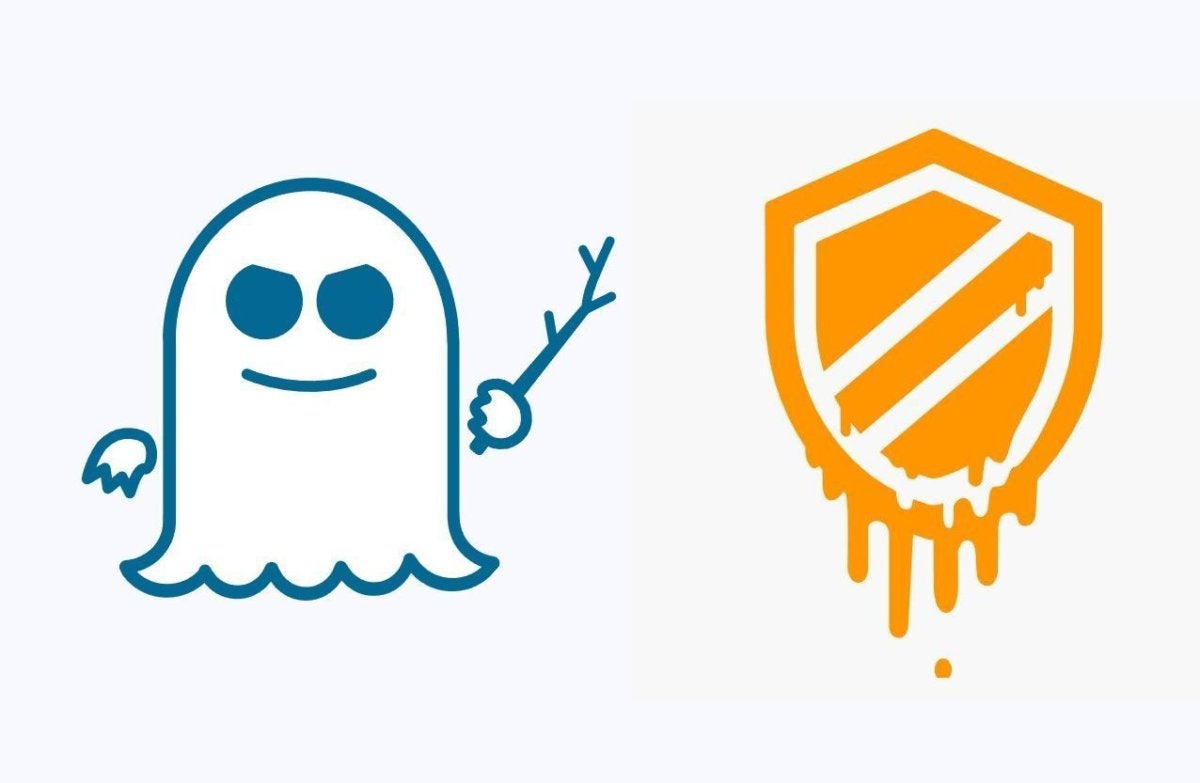
   This whole Spectre/Meltdown thing has gotten so much attention lately. But the reports are loaded with misinformation, speculation (!), and even some facts.  I’ve have seen some uber-geeky explanations of what is going on.  If you haven’t seen the major rant by the father of linux Linus Torvalds, check this out.

   One thing that has been lacking is more simple, straightforward explanations of this complex topic.  I think Steve Gibson did a great job talking about this recently in his SecurityNow! podcast.  He actually explained the underlying mechanism of speculative execution years ago when he was talking about how modern processors work.

   Speculative Execution is really pretty cool.  It can be complex, but a good example is when there are two choices in how some code may execute, i.e. GO here or GO here, the processor does both!  And it executes steps ahead from where you are in the code now.  The overall effect is that the code executes faster.  It’s kind of like paying it forward with extra computing cycles.  Here's a great explanation.

   Here’s the point about this vulnerability… we’ve had plenty of named vulnerabilities.  They are all the rage these past few years – a name and a logo.  But most of these vulnerabilities are code or protocol problems.  Yes, some of those were very wide ranging.  However, this newly discovered problem is a vulnerability in the underlying architecture of nearly every modern computer chip created since 1995.  Everywhere.

   And while this has not been exploited in practice, that will happen.  The Fix is not yet in.  For now, the advice is to not panic, patch selectively and we’ll all watch and wait!

Tuesday, January 9, 2018

Meta-Predictions

   Well, it's a new year and we all know what that means... every security publication, and plenty of non-security publications, come out with their annual security predictions.

   I predict that this year's predictions will be as boring and vanilla as last year's.  And we don't even have to wait until the end of the year to see if I'm right!

   So, rather than adding to the noise, I'll save you some clicks.  Everybody's saying the same things... cybercrime, blockchain, cryptocurrency, breaches, yada yada.

   But some people went above and beyond to make the prediction reading experience special!  Here are my favorites:

   Best presentation.  Kudos on the production value of this prediction post by Watchguard.  Between the nice graphics and videos, I was engaged.  They didn't say anything new... but the way they said it makes it worth a look.
https://www.watchguard.com/wgrd-resource-center/2018-security-predictions

   Best use of AI.  This is a great idea... how about machine-generated predictions!  Great fun.  And I, for one, welcome our AI overlords.  Even the text that doesn't make sense makes more sense than some other predictions!  Well done Kelly and Medium.
https://medium.com/@kshortridge/2018-cyber-security-predictions-d493e25162e7

   Best prediction of the death of passwords.  Well, really they said that password-only authentication will decrease faster.  OK, either way, we've been down this road many times before and, unfortunately, passwords ain't goin' nowhere.  We're stuck with them.
https://www.csoonline.com/article/3242866/security/our-top-7-cyber-security-predictions-for-2018.html

   Remembering what we said in 2017 award.  This post doesn't say anything particularly interesting, but I like that they go back and grade their 2017 predictions.  Of course, those predictions were pretty bland but they only gave themselves a generous 9.5 out of 10.  http://resources.infosecinstitute.com/2018-cyber-security-predictions/

   tl;dr award.  I seriously did not even read this one.  Really Forbes?  60 predictions?  I guess all the ad networks you hit us with aren't enough?  I guess quantity wins.
https://www.forbes.com/sites/gilpress/2017/11/26/60-cybersecurity-predictions-for-2018/

   What are your favorite predictions?

   Here's to a great 2018!

Tuesday, December 12, 2017

Ho-Ho-Holiday Spams and Scams

   It's that time of year again folks.  And whatever holiday you may, or may not, celebrate... there's something we're all likely to see.  It's not presents, though maybe there are some for you.  It's not snow, though we're already seeing that here in the upper midwest US.

   It's malware and holiday scams!

   Unfortunately, it happens every year.  Sometimes it's malicious attachments.  Sometimes it's links to malware to download or phishing sites with forms ready to collect your personal and financial information.

   Here is my 2017 edition of my Top 10 Tips To Avoid Holiday Spams and Scams...

Tuesday, November 28, 2017

You Don't Have to Outrun the (Fancy) Bear

   Two hikers are walking through the woods.  They come around a bend in the trail into a clearing where they can take a break, when suddenly a bear steps out of the woods and roars.  One hiker quickly bends down to tighten his boot laces.  The other hiker says, "what are you doing? You can't outrun a bear!".  The first hiker says, "I don't have to outrun the bear, I only have to outrun you!".

   One of the biggest changes in information security over the past two decades has been with the attackers.  Rather than the old stereotype of a hoodie-wearing loner in the basements with Mountain Dew, Twinkies and old computers, today's attacker is typically trained, smart and well-funded.  Instead of defacing websites for fun and notoriety, attacks today are a business.

   It's a simple risk/reward equation.  There is a cost to any attack.  Email-based attacks are very inexpensive to launch.  Developing sophisticated malware is expensive.  And the more expensive an attack is pull off, the higher the potential gains need to be to make a profit.

   Information security is very complex.  It's as much an art as it is a science.  There are basic things that everyone should do, like patching systems and using strong, long passwords.  And then there are complex solutions to complex problems that need to be artfully implemented to compliment the way people do their work.

   There are so many high profile breaches in the news.  Some of these are the result of highly skilled and motivated attackers going after a specific target.  But many more are "crimes of opportunity".

   As I see it, there are basically three kinds of online attacks:

Tuesday, October 3, 2017

Thoughts about Change

   We've all heard the cliche, the only thing that is constant is change.  Many of our organizations are undergoing all kinds of change.  We may have professional changes.  And, of course, there are personal or life changes.

   Sometimes you have control over changes - they can be choices.  Sometimes you don't have control over the change.  But you do have control over how you respond to change.

I've spoken with many people whose organizations are undergoing change.  That can lead to some uncertainty, but that is not necessarily a bad thing.  It's really just something new.  And change often brings opportunity!

   One model that can be used to help people through change is the Bridges Model of Transition.  Bridges defines a transition path that begins when a change is announced or recognized. and ends when people are successfully in the changed state.  The key is what happens in between!  Bridges describes 3 stages that people must move through.
  1. Letting Go - this means both understanding and coming to terms with the change.  It can be characterized by fear or other negative emotions.  Leaders can help by communicating, listening, and empathizing.  Recognize that different people change at different rates.  Individuals can help by talking things through with their leaders.
  2. The Neutral Zone - this occurs once people get past their initial reaction to change.  This can be a period of uncertainty.  Leaders can help by providing direction and continuing to communicate.
  3. The New Beginning - this occurs when the organization has arrived at the new state.  Since people do change at different rates, all team members may not arrive here together. Leaders can help by recognizing the state of team, providing extra direction where needed, and celebrating successes of the transition.
   I've been thinking about the topic of change for a couple of reasons.  First, my current organization is undergoing the change of integrating in a new organization.  This is actually a great synergy and creates many great opportunities both for the business and for individuals.  But as we discussed above, change affects different people differently.

   In addition, I'll be undergoing my own change soon as I transition to a new and exciting opportunity!

   Thank you to all my current colleagues for their partnership and support!  I know our paths will cross in the future.

Tuesday, September 5, 2017

I Have Neither Read Nor Understood

   The site masthead starts out with the statement:“I have read and agree to the Terms” is the biggest lie on the web. We aim to fix that.

   This is the lead statement on the tosdr.org website.  tosdr is an acronym for "Terms of Service; Didn't Read".  It's a play on words (play on acronyms? :-)) of tl;dr, Too Long; Didn't Read.  tl;dr has been a term floating around the interwebs for many years.  It simply expresses a sentiment that many people can relate to... that we're busy, so when there is a long article, post, whitepaper, document, documentation, etc., we might just not read it.  That also leads to the idea of the tl;dr version, i.e. executive summary!

   Clearly, Terms of Service statements fit into this category.  They tend to be exceedingly long.  They are often written FLBL (For Lawyers, By Lawyers)! :-)  You see them all over the place... on your bank's website, on social media sites, when you sign up for just about any kind of service, and with just about every app you install.

   So, if no one reads them, what's the problem?  Like a contract, the Terms of Service or EULA (End User License Agreement) provides some very important information.  For example, it may cover:
  • how the app, website or company can use your personal data;
  • if the site can sell your data,
  • whether or not you own any content you upload (such as to a social media site);
  • how, when, how much you can use the app, service or website;
  • if the site can charge you money, either one time or ongoing;
  • if you have any rights to seek damages against the company if you don't like how they conduct business
  • and more...

Tuesday, June 20, 2017

Payday!

   I received this great news in email today.  For some reason gmail marked it as spam!  But it looks great to me! :-)

Tuesday, April 11, 2017

Cyberbullying and the New Math

   According to Cyberbullying Research Center, the National Crime Victimization Survey (NCVS) is a large-scale data collection effort led by the U.S. Census Bureau and the Bureau of Justice Statistics.  This study has been going on since 1973.  In 1989 they added supplemental questions focused on school-related incidents, and stepped this up to a more in-depth biennial survey in 2005.

   Cyberbullying is still a major issue.  It's been over 4 years since I've written on this subject.  While there is perhaps more visibility, the basic problems haven't changed.

  Based on the above benchmark, at first glance, bullying appears to be trending down over the past decade.


   While there have been some high-profile cases over the years, this is a real, current and ongoing issue.

Tuesday, March 14, 2017

A Culture of Security - The Best Infection! (repost)


   This week we're relaunching our Security Awareness campaign at work.  In honor of that, I thought we should re-sample a past post on this subject.  Enjoy!


   I was recently reading an interesting article at SearchSecurity entitled Staff infection: IT security education is contagious.  The article notes that security is the responsibility of every individual and that for an organization to have even a semblance of security, there has to be both buy-in and shared action by the members of the organization.

   The article, very correctly, mentions:
Even in today’s world, the general IT worker tends to view security as a barrier and a pain. It is implemented by someone else, and it makes their job harder to perform.
   This is one of the key problems caused by many security programs.  The information security industry often causes problems for itself by being difficult and inflexible.  Security is often viewed as a barrier.  Security is the group that adds extra requirements, delays projects and increases costs.  And with all of that, Security can't guarantee prevention, nor even provide a reliable probability of, an incident or breach.

Tuesday, February 14, 2017

ID Fraud, Taxes and Doctors Again (Still?)

   It's that time of year again.  Brian Krebs just put out an article on "darkweb" sales of W-2 information.  You can read that article here.  As is so often the case, the advice to protect yourself hasn't changed - and be assured, you must protect yourself because no one else will, certainly not the IRS!

   As noted below and in the Krebs' article, what you need to do now and always is:

  1. file your taxes early
  2. monitor your credit (I covered that topic here... in 2013!)
  3. freeze your credit (two articles from Krebs, also from 2015)
  4. become you before someone else becomes you (I wrote about that subject here)

   Here's a re-run of my article on this subject from two years ago.  It's all still true...

   I did a series of posts last year (2014) on the problem of ID Fraud.  This is an ongoing issue, certainly because organizations struggle to protect information, there are cyber attackers out there, and also individuals don't often take steps to protect their own information.

   The bottom line is that your personal information, primarily your financial information, has tangible dollar value to a cyber attacker.

   We usually think about credit card fraud or maybe bank account fraud as the results of these kinds of data breaches.  But in this post and the next I'd like to talk about two other scenarios that have happened, are happening... and you need to be aware.

   It's that wonderful time of year again in the US.  Crisp weather, snow (most places), the days are starting to get a bit longer... and it's the beginning of tax filing season.

   Imagine you are doing your civic duty, filling out and filing your tax return.  You send it in to the IRS, only to find out that "you" already filed your return and "you' have already received your rather sizable refund - surprise!

   Unfortunately, this has happened.  And, as we've discussed in the past, these attackers are smart.  This is a business.  They need to be able to maximize profits because there is a limited timeframe in which to commit the crime.  So they need to attack a sub-population who:
  1. makes good money;
  2. might have many deductions;
  3. might have complex returns, and;
  4. for whom a large refund might not raise red flags.
   How about... Doctors!

   And, just as I finishing writing this article, we have new news out about tax fraud this year!  Reports say this is connected with Turbo Tax software, but it is more likely that scammers got people's info through other means and filed the fraudulent returns.  Maybe Turbo Tax is just the scammers software of choice! :-)

   As always, we want to talk about what you can do.

   In addition to the steps outlined in these previous blog posts, here is the IRS Guide on Identity Theft.  The IRS guide and my previous tips talk about not only what you should do if you are a victim, but tips to avoid the problem in the first place including:
  • protecting your personal information, primarily your social security number
  • don't click on links sent to you via email or in social media - type the link in yourself or do a search
  • use link rating applications like Web Of Trust (WOT)
  • don't give our your personal information via web, email, phone unless you can positively identify the person on the other end
  • review your bills, credit record and other information that might provide early warning of a problem.
   Have you been the victim of tax-related ID Fraud?  Do you have any additional tips to share?

   Of course, this issue is not just about doctors!  Next time we'll talk about something perhaps even closer to your wallet... payroll fraud and misuse.

Tuesday, December 6, 2016

Information Security Learning Resources part 2

   Today we have part 2 of a 2-part guest post by security analyst Chris Goff.  Chris has collected a set
of info, links and lists that definitely qualify as extremely cool resources!  You can check out Chris' website at http://chris-goff.com/ or follow him at https://www.linkedin.com/in/goffchris

   There's a lot of info packed in here, and it's pretty technical. But you don't have to memorize it all now and there won't be a test!  Just skim it, enjoy it and bookmark it!

Security Concepts
There are three key concepts of information security which you may or may not be familiar with:
    -      Confidentiality
o   Confidentiality is the characteristic of information whereby only those with sufficient privileges and a demonstrated need may access certain information. When unauthorized individuals or systems can view information, confidentiality is breached.
    -      Integrity
o   Integrity is the quality or state of being whole, complete, and uncorrupted. The integrity of information is threatened when it is exposed to corruption, damaged, destruction, or other disruption of its authentic state. Corruption can occur while information is being entered, stored, or transmitted.
    -      Availability
o   Availability is the characteristic of information that enables user access to information in a usable format without interference or obstruction. A user in this definition may be either a person or another computer system. Availability does not imply that the information is accessible to any user; rather, it means availability to authorized users.

This is known as the “security triad”. It can be further expanded upon:
    -      Privacy
o   Information that is collected, used, and stored by an organization is intended only for the purposes stated by the data owner at the time it was collected. Privacy as a characteristic of information does not signify freedom from observation (the meaning usually associated with the word), but in this context, privacy means that information will be used only in ways known to the person providing it. Many organizations collect, swap, and sell personal information as a commodity. It is now possible to collect and combine information on individuals from separate sources, which has yielded detailed databases whose data might be used in ways not agreed to, or even communicated to, the original data owner. Many people have become aware of these practices and are looking to the government for protection of the privacy of their data.
    -      Identification
o   An information system possesses the characteristic of identification when it is able to recognize individual users. Identification is the first step in gaining access to secured material, and it services as the foundation for subsequent authentication and authorization. Identification and authentication are essential to establishing the level of access or authorization that an individual is granted. Identification is typically performed by means of a user name or other ID.
    -      Authentication
o   An information system possesses the identity that he or she claims. Examples include the use of cryptographic certificates to establish Secure Sockets Layer (SSL) connections or the use of cryptographic hardware devices--for example, hardware tokens provided by companies such as RSA's SecurID--to confirm a user's identity.
    -      Authorization
o   After the identity of a user is authenticated, a process called authorization assures that the user (whether a person or a computer) has been specifically and explicitly authorized by the proper authority to access, update, or delete the contents of an information asset. An example of authorization is the activation and use of access control lists and authorization groups in a networking environment. Another example is a database authorization scheme to verify that the user of an application is authorized for specific functions such as reading, writing, creating, and deleting.
    -      Accountability
o   Accountability of information exists when a control provides assurance that every activity undertaken can be attributed to a named person or automated process. For example, audit logs that track user activity on an information system provide accountability. (Management of Information Security by Michael E. Whitman and Herbert J. Mattord)

Tuesday, November 22, 2016

Information Security Learning Resources part 1

   Today we have a guest post by security analyst Chris Goff.  Chris has collected a set of info, links and lists that definitely qualify as extremely cool resources!  You can check out Chris' website
at http://chris-goff.com/ or follow him at https://www.linkedin.com/in/goffchris

   There's a lot of info packed in here, and it's pretty technical. But you don't have to memorize it all now and there won't be a test!  Just skim it, enjoy it and bookmark it!


Information Security Learning Resources
or information security for the self-learner
by Chris Goff

This is the result of many years of notes. This is by no means an exhaustive list, nor the definitive path to information security.

If you come across a dead link, use the Internet Way Back Machine (https://www.archive.org).

Bookmark these Google Search cheat sheets, they will come in handy:

Official Google Cheat Sheet - http://www.google.com/help/cheatsheet.html

Google Advanced Operators Cheat Sheet - http://www.googleguide.com/print/adv_op_ref.pdf

Learning How To Learn - http://l.goodbits.io/l/407nqn1n

Core competencies

Here are three core competencies within information technology that will provide a solid foundation on which to start a security career:
  • Systems Administration
  • Network Administration
  • Programming
It is also critical that you learn to deal with people and business. Take some public speaking classes (Toastmasters: https://www.toastmasters.org/), volunteer for presentations at local groups, and volunteer to deliver training for folks at your workplace. One of the greatest methods of learning is to teach.

The core competencies are not a requirement, however be aware that InfoSec is expected to be a Subject Matter Expert (SME) on most topics. If you wish to be successful diversity of knowledge is key.
“There is no security without understanding.” – Michael Lucas, author Absolute OpenBSD

Tuesday, October 11, 2016

What You Can''t See Can Hurt You(r Data)

   "It is all around us, even now in this very room. You can see it when you look out your window or when you turn on your television. You can feel it when you go to work, when you go to church, when you pay your taxes.."

   It's "all around you. Here, between you, me, the tree, the rock, everywhere."

   No, not the Matrix and not the Force, but a more insidious power... WiFi!

   Public WiFi is everywhere.  Many stores, malls, airports, cities and even parks offer it.  Sometimes it's free and sometimes not.

   It's US Cyber Security Awareness Month so it's a good time to think about the risks of using public WiFi and how to protect yourself.

   There are definitely risks in using public WiFi including:
  • pushing software - WiFi can be configured to send software to your device when you connect.  That might be OK at home or important in the office, but it can be misused by an attacker out in public.  Don't install software offered to you on a public WiFi.
  • redirecting your browsing - a WiFi connection can control how you get to websites.  If an attacker controls the WiFi, they can cause you to go to copycat websites with malicious software or to phishing sites.
  • evil twin attack - you know when you're at the coffee shop and you can connect with a WiFi connection that has the same name as that coffee shop?  How do you know it's really the coffee shop's connection?  You don't.  Anyone can buy a wireless router at the store for $25, put it anywhere, and name it anything they want.  Using a deceptive name for a WiFi connection to lure people is called the evil twin attack.
  • are you encrypted? - VPNs, Virtual Private Networks or secure connections, are a great way to protect your data when connecting over unknown networks... like the Internet!  However, you first have to connect to the Internet before establishing the VPN.
Here are some tips to reduce your risks of using WiFi outside your home or office:
  • use your smartphone hotspot - if this is a feature of your mobile phone and plan, you can use your phone as a WiFi hotspot and connect to it.  You then can feel confident that your connection is going through your cellular carrier.  Warning... this will use your mobile data and may cost you extra depending upon your plan and data limits.
  • only use wifi with a password or passphrase - even if everyone knows the password.  Using WPA or WPA2 with a password/passphrase means that every connection between a PC and the wireless network is encrypted.
  • turn off file sharing - in Windows you can designate a network as public, work or home, or you can directly turn off file sharing.  Here's an article with the instructions.
  • if possible don't use open wifi in very open areas - the more open an area you're in, the harder it is to figure out if you're connected to a legit WiFi.  And...
  • be aware of your surroundings - it's not strictly a WiFi issue, but when you're on public WiFi you're in... Public!  Protect your screen.  Protect your passwords.
   Even if you do all this, a skilled attacker can still cause you problems on a public WiFi network.  So, if you have to use public WiFi, try to:

  • limit personal info - even if it looks like a website is https, do your personal business from a secure connection at home
  • same for banking, shopping - definitely save your financial transactions for known secure connections
  • use care with confidential work data - you should use care when dealing with critical work data, particularly if you work with other peoples' personal data!
   Here are a few articles with more info.

   As a side note, there are also questions about potential health risks of all the wireless signals in our environment.  It's hard to separate fact from speculation and wireless may or may not be a health issue.

   In the future we'll see even more wireless than we do now.  And we'll also see better wireless network security.  Many new cars come with WiFi hotspots and more cities and municipalities are offering wireless. 

   What are your tips for public WiFi safety?  Have you ever come across an "evil twin" WiFi network?

Tuesday, October 4, 2016

Can't Live with 'em, Can't Live without 'em

   They're dead.  They're here to stay.

   They're safe.  They're breached.

   They're encrypted.  They're visible.

   They're complex.  They're too simple.

   Once again, the topic we love to hate... Passwords!  And, you know what else???  It's also that greatest of holiday celebrations... US Cyber Security Month!

   In honor of US Cyber Security Month and the recently announced breach of 500 million Yahoo! account passwords and other info  (while announced in 2016, the breach actually took place in 2014, and is not the same as the password breach they had in 2012! - yes, I know... it's hard to keep up!), I'm re-running a post I wrote in... wait for it... 2012!  Not only is everything I wrote in that post 100% relevant today, but I even commented on that 2012 Yahoo! breach.  The more things change, the more they stay the same.  Happy Cyber Security Month!
-----------------
   Passwords are a mess!  A "good" password has these features:
  • hard to create
  • hard to remember
  • hard to enter
  • probably has to be changed as soon as you memorize it
  • plus other inconsistent, random rules depending upon the site
   Perfect!

Tuesday, August 23, 2016

ESCROW - Extreme Security Cool Resource Of the Week!

   ESCROW - Extreme Security Cool Resources Of the Week.  OK, well sometimes you start with the acronym and see how you can make it work!  And I've got a good one for you.

   It's a bit geeky, but if you're interested in learning more about the more in-depth technical aspects of security you will enjoy this resource.  And I've got another, less geeky, resource.

   Everyone knows about Youtube.  You can find just about anything there, but there's so much content that sometimes it's hard to find what you're looking for.

   Enter SecurityTube, securitytube.net, and SecurityTube, securitytube-training.com - originally created as a way to aggregate information security videos in one place.  These are some fantastic free online learning resources.

   Some of the resources have difficulty ratings to help you choose the right course of video.  For example, this one on Wireless LAN (WLAN) security is rated "easy" (and that's certainly in the eye of the beholder!).

   For those who don't want anything that in depth, here's another tip.  You can go to Youtube and search for "cybersecurity for beginners".  There are many basic information security videos there including this one from NOVA PBS:


  Check some of these out and let me know what you think!

Tuesday, July 26, 2016

Gotta Catch Some of 'Em

   Because you just can't catch 'em all!

   I guess I can't get around having to comment on Pokemon Go.

   If you have children, or if you were, born in the 90's through the 00's then you know all about Pokemon.  It used to be about the cards, action figures and, of course, the video games.  Remember the Game Boys, game cartridges and all the sounds and music?!

   With Pokemon Go, the game has gone from sometimes mobile to really mobile.  And from sometimes social to a social phenomenon.

   It's not farfetch'd!
   For some reason, many adults seem to dislike this game, siting issues like inattention to surroundings, time spent playing, etc.  I think the game is great!  Here are my top reasons why (major caveat... I have not actually played the game!  These are my observations as a technology and security professional and as a parent):
  • It gets kids out of the house - many people need a little Vitamin D.  One of the biggest complaints about gaming and computers for kids is that they don't get outside enough.
  • It gets kids moving - #exercise.  While there have been some attempts at game-ifying exercise, such as Wii Fit, it never really caught on.  Pokemon Go gets people outdoors and moving around.  In fact, part of the game is logging lots of steps.
  • It's for "kids" of all ages - parents can play along with their kids!  You don't have to play, but at the very least it's a great opportunity to be involved.
  • It's really social - you may remember that, back in the day, players could connect two Gameboys so two people could battle.  Now people are connecting IRL (In Real Life) as they hike trails, walk through cities or congregate at parks or other PokeStops.
  • It's another step toward acceptance of Augmented Reality.  Unlike Virtual Reality, in which one is entirely immersed in a manufactured visual scene, Augmented Reality overlays images, text or other information on top of what you are actually looking at.

Tuesday, June 14, 2016

Because Math

   Encryption has been in the news again - whether it's ransomware, law enforcement and iPhones, bitcoin, quantum computing, or potential new laws.  Before we can "decrypt" all these issues, we need to talk a bit about what encryption is and isn't.

   There's an old saying in Security... "if you think encryption is the answer, you might not have understood the question".  I never liked the tone of that statement because it sounds kind of elitist, but it is basically true.  And that's because encryption is very confusing.

   Encrypting data is great because it means it can't read by unauthorized people.  And that is the trick... how to let the right people in and keep the wrong people out.  If my encrypted data is unreadable by anyone then that's called Ransomware!

   Encrypting my data so only I can read it is pretty easy.  It means that only I need the "key".  Of course, I better not loose that key!  Encrypting my data so I can share it with you is also pretty easy.  We just need a "shared secret".  If I need to share my data with a bunch of people then we get into something called "public key cryptography".  Here's a good explanation of that.


   Encryption is basically a solved problem.  Because math.  #math.  There are many great algorithms with cool names like Elliptic Curve, RSA and Two-Fish.