Showing posts with label patch. Show all posts

Tuesday, January 30, 2018

Speculative Speculation

   Patch.

   NO WAIT!... DON’T Patch!

   It may cause unexpected reboots (as opposed to the expected kind???? J).

   It may cause system slowdowns.

   It may conflict with your other system controls.

   It sounds kind of like the “fine print” in one of those pharmaceutical adds… patching side effects may include arrhythmia, faintness, moderate to severe amnesia, flushing of the face, dry mouth, blurry vision, visual distortions or white spots, nausea and vomiting, constipation, muscle twitches, confusion, euphoria, sedation, itchiness, and increased anxiety, respiratory or cardiac arrest, coma, hypoventilation (inadequate ventilation), and possibly death.
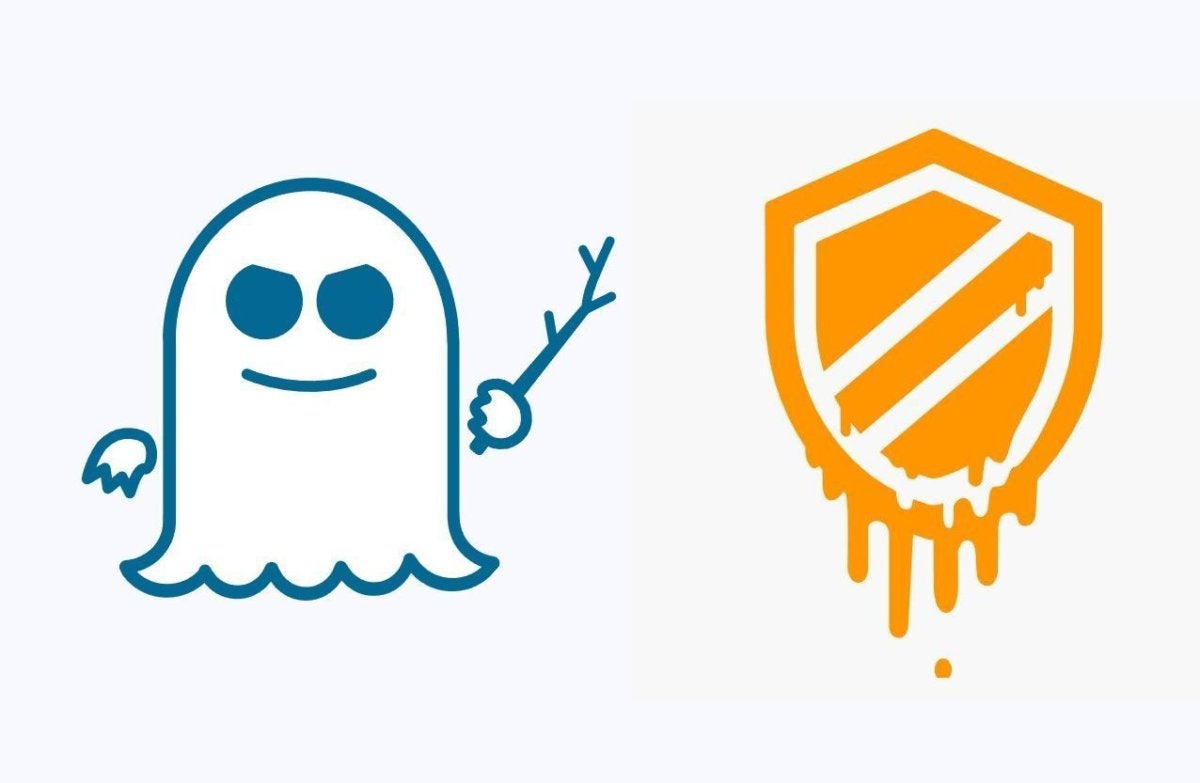
   This whole Spectre/Meltdown thing has gotten so much attention lately. But the reports are loaded with misinformation, speculation (!), and even some facts.  I’ve have seen some uber-geeky explanations of what is going on.  If you haven’t seen the major rant by the father of linux Linus Torvalds, check this out.

   One thing that has been lacking is more simple, straightforward explanations of this complex topic.  I think Steve Gibson did a great job talking about this recently in his SecurityNow! podcast.  He actually explained the underlying mechanism of speculative execution years ago when he was talking about how modern processors work.

   Speculative Execution is really pretty cool.  It can be complex, but a good example is when there are two choices in how some code may execute, i.e. GO here or GO here, the processor does both!  And it executes steps ahead from where you are in the code now.  The overall effect is that the code executes faster.  It’s kind of like paying it forward with extra computing cycles.  Here's a great explanation.

   Here’s the point about this vulnerability… we’ve had plenty of named vulnerabilities.  They are all the rage these past few years – a name and a logo.  But most of these vulnerabilities are code or protocol problems.  Yes, some of those were very wide ranging.  However, this newly discovered problem is a vulnerability in the underlying architecture of nearly every modern computer chip created since 1995.  Everywhere.

   And while this has not been exploited in practice, that will happen.  The Fix is not yet in.  For now, the advice is to not panic, patch selectively and we’ll all watch and wait!

Tuesday, November 28, 2017

You Don't Have to Outrun the (Fancy) Bear

   Two hikers are walking through the woods.  They come around a bend in the trail into a clearing where they can take a break, when suddenly a bear steps out of the woods and roars.  One hiker quickly bends down to tighten his boot laces.  The other hiker says, "what are you doing? You can't outrun a bear!".  The first hiker says, "I don't have to outrun the bear, I only have to outrun you!".

   One of the biggest changes in information security over the past two decades has been with the attackers.  Rather than the old stereotype of a hoodie-wearing loner in the basements with Mountain Dew, Twinkies and old computers, today's attacker is typically trained, smart and well-funded.  Instead of defacing websites for fun and notoriety, attacks today are a business.

   It's a simple risk/reward equation.  There is a cost to any attack.  Email-based attacks are very inexpensive to launch.  Developing sophisticated malware is expensive.  And the more expensive an attack is pull off, the higher the potential gains need to be to make a profit.

   Information security is very complex.  It's as much an art as it is a science.  There are basic things that everyone should do, like patching systems and using strong, long passwords.  And then there are complex solutions to complex problems that need to be artfully implemented to compliment the way people do their work.

   There are so many high profile breaches in the news.  Some of these are the result of highly skilled and motivated attackers going after a specific target.  But many more are "crimes of opportunity".

   As I see it, there are basically three kinds of online attacks:

Tuesday, October 31, 2017

Easy as 1-2-3

   It's US Cyber Security Month and the key themes I've been discussing here for years are very bit as relevant today.  In honor of Cyber Security Month I'm re-running a post from 2016.  The more things change, the more they stay the same.  Happy Cyber Security Month!

   Well, I was trying for something catchy like Stop, Drop and Roll.  That's a saying we learned in school, back in the day, for what you should do if your clothes catch on fire.

   Fortunately, it seems like everyone has heard that saying and it rolls off the tongue.

   Unfortunately, my three word phrase Patch, Vault and Fob, is not nearly as catchy.

   Fortunately, the odds of your clothes catching on fire is low.

   Unfortunately, the odds of your software, browsers or accounts being compromised is very high.

   A couple of weeks ago the internet was hit with the highly impact-full and publicized distributed denial of service (DDoS) attack on Dyn, a DNS provider.  I won't go into the details here but I think I will cover DDoS in a future post.  Anyway, shortly after that I was chatting with someone at a dinner who asked me about this attack, internet safety in general and what they could do.  To keep it simple and because, as a math person I like things in 3's!, I provided these 3 simple (well, maybe straight-forward is more accurate) things that absolutely everyone should do at home...

Tuesday, January 3, 2017

New Year, Don't Click!

   Well, it's a new year and, as we've discussed in the past, the more things change the more they stay the same.

   My advice for 2017... Don't Click!

   Of course, that's easier said than done.  We've discussed phishing and malicious email here, here and here.

   But on a more practical note, and because I like things that come in 3's, here's some info from the way-back machine... it's advice from Brian Krebs from 2011.  It is his 3 basic rules for online safety.  They are every bit as relevant now as when this was first published.  And it was relevant for years before that.

   The 3 rules are:
  1. If you didn’t go looking for it, don’t install it - this means when you get a pop-up asking you to install some software... don't click!  Only install software that you look for and intend to use.  And, wherever possible, install from reputable websites.  Do your research.
  2. If you installed it, update it - After you install the software you want, you need to keep it up to date.  This is not trivial, but I like using Secunia PSI (Personal Software Inspector) on my home systems for keeping software up to date.
  3. If you no longer need it, remove it - software will have vulnerabilities.  The less software you have, the fewer opportunities there are for vulnerabilities and malware.  This is especially true on your smartphone and tablet, where excess software really slows the performance of the device.
   Here's to a safe and secure 2017!

Tuesday, November 8, 2016

Patch, Vault 'n Fob

   Well, I was trying for something catchy like Stop, Drop and Roll.  That's a saying we learned in school, back in the day, for what you should do if your clothes catch on fire.

   Fortunately, it seems like everyone has heard that saying and it rolls off the tongue.

   Unfortunately, my three word phrase Patch, Vault and Fob, is not nearly as catchy.

   Fortunately, the odds of your clothes catching on fire is low.

   Unfortunately, the odds of your software, browsers or accounts being compromised is very high.

   A couple of weeks ago the internet was hit with the highly impact-full and publicized distributed denial of service (DDoS) attack on Dyn, a DNS provider.  I won't go into the details here but I think I will cover DDoS in a future post.  Anyway, shortly after that I was chatting with someone at a dinner who asked me about this attack, internet safety in general and what they could do.  To keep it simple and because, as a math person I like things in 3's!, I provided these 3 simple (well, maybe straight-forward is more accurate) things that absolutely everyone should do at home...